
- Amazon Seller Central
Seller Central is a platform where businesses or individuals sell products directly to customers on Amazon.
Objective: Control your own product listings Manage inventory and pricing Handle fulfillment yourself or use FBA (Fulfillment by Amazon) Build your own brand presence How It Works: You create product listings. Customers purchase products from you. Amazon takes a commission and fulfillment fees (if using FBA). You receive payment from Amazon after deductions. Best For: Small and medium businesses D2C brands Private label sellers Startups 2. Amazon Vendor Central
Vendor Central is an invitation-only platform where businesses sell products directly to Amazon, and Amazon resells them to customers.
Objective: Operate as a wholesale supplier to Amazon Increase product distribution Leverage Amazon's retail operations How It Works: Amazon sends Purchase Orders (POs). Vendor ships inventory to Amazon warehouses. Amazon owns inventory and controls pricing. Amazon sells products directly to customers. Best For: Manufacturers Large brands Established distributors Companies with high-volume inventory Seller Central vs Vendor Central Comparison Feature Seller Central Vendor Central Business Model Direct-to-Consumer Wholesale to Amazon Customer Relationship Seller owns Amazon owns Pricing Control Full control Amazon controls Inventory Ownership Seller Amazon Platform Access Open registration Invitation only Profit Margin Higher potential Lower but stable Marketing Control High Limited Cash Flow Based on sales Based on Amazon POs Example
Imagine you manufacture mobile chargers:
Seller Central You list a charger for ₹999. Customer buys directly from you. Amazon deducts fees. Remaining amount is credited to your account. Vendor Central Amazon purchases 10,000 chargers from you at ₹600 each. Amazon decides the final selling price. Your customer is Amazon, not the end consumer.
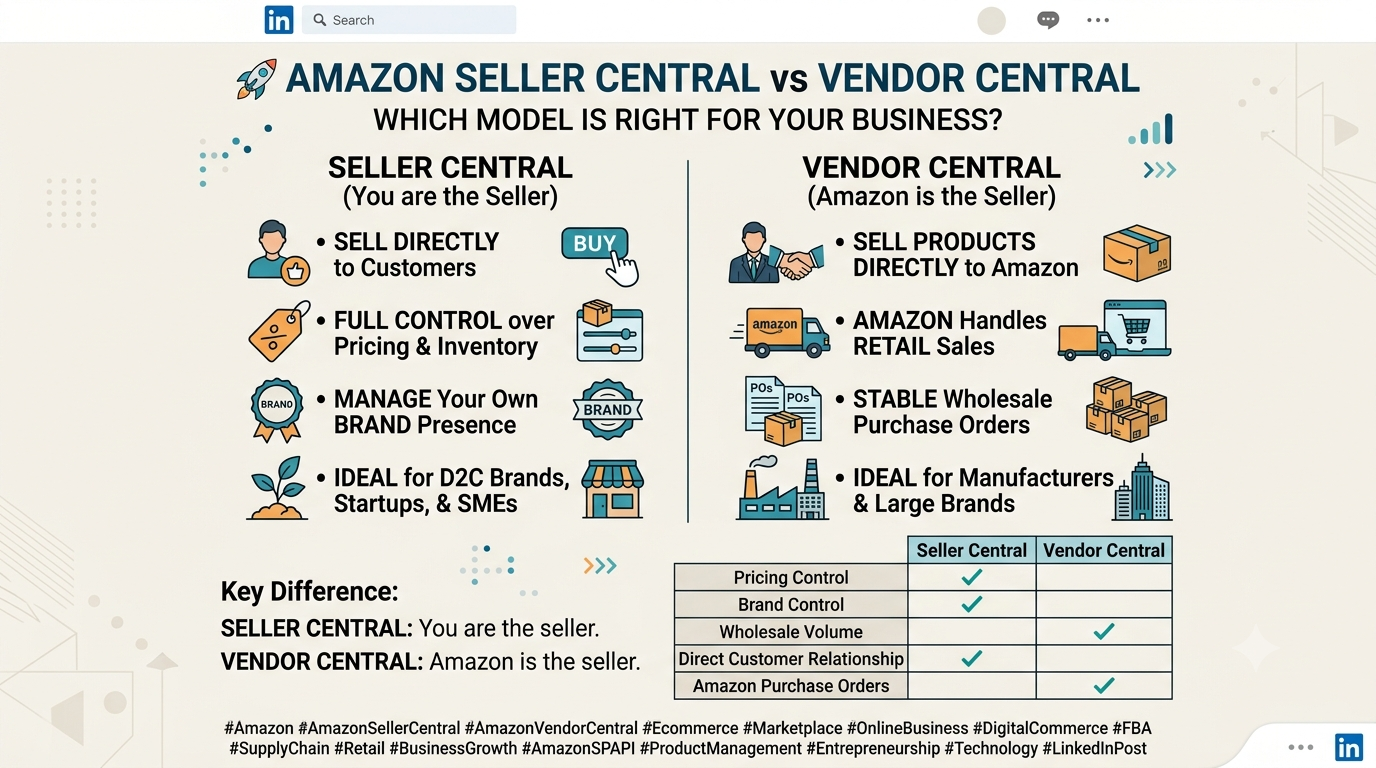
🚀 Amazon Seller Central vs Vendor Central – Which Model Is Right for Your Business?
Many businesses entering the Amazon ecosystem often ask:
👉 Should we sell through Seller Central or Vendor Central?
🛒 Seller Central
✅ Sell directly to customers ✅ Full control over pricing and inventory ✅ Manage your own brand presence ✅ Ideal for D2C brands, startups, and SMEs
🏢 Vendor Central
✅ Sell products directly to Amazon ✅ Amazon handles retail sales ✅ Stable wholesale purchase orders ✅ Ideal for manufacturers and large brands
Key Difference
Seller Central: You are the seller. Vendor Central: Amazon is the seller.
Quick Comparison
✔ Pricing Control → Seller Central ✔ Brand Control → Seller Central ✔ Wholesale Volume → Vendor Central ✔ Direct Customer Relationship → Seller Central ✔ Amazon Purchase Orders → Vendor Central
My Take
For most growing brands, Seller Central provides greater flexibility, better margins, and stronger brand control. Vendor Central becomes attractive when a business can support large-scale wholesale operations and wants Amazon to manage retail distribution.
Understanding the right model can significantly impact profitability, inventory management, and long-term growth on Amazon.
#Amazon #AmazonSellerCentral #AmazonVendorCentral #Ecommerce #Marketplace #OnlineBusiness #DigitalCommerce #FBA #SupplyChain #Retail #BusinessGrowth #AmazonSPAPI #ProductManagement #Entrepreneurship #Technology #LinkedInPost