
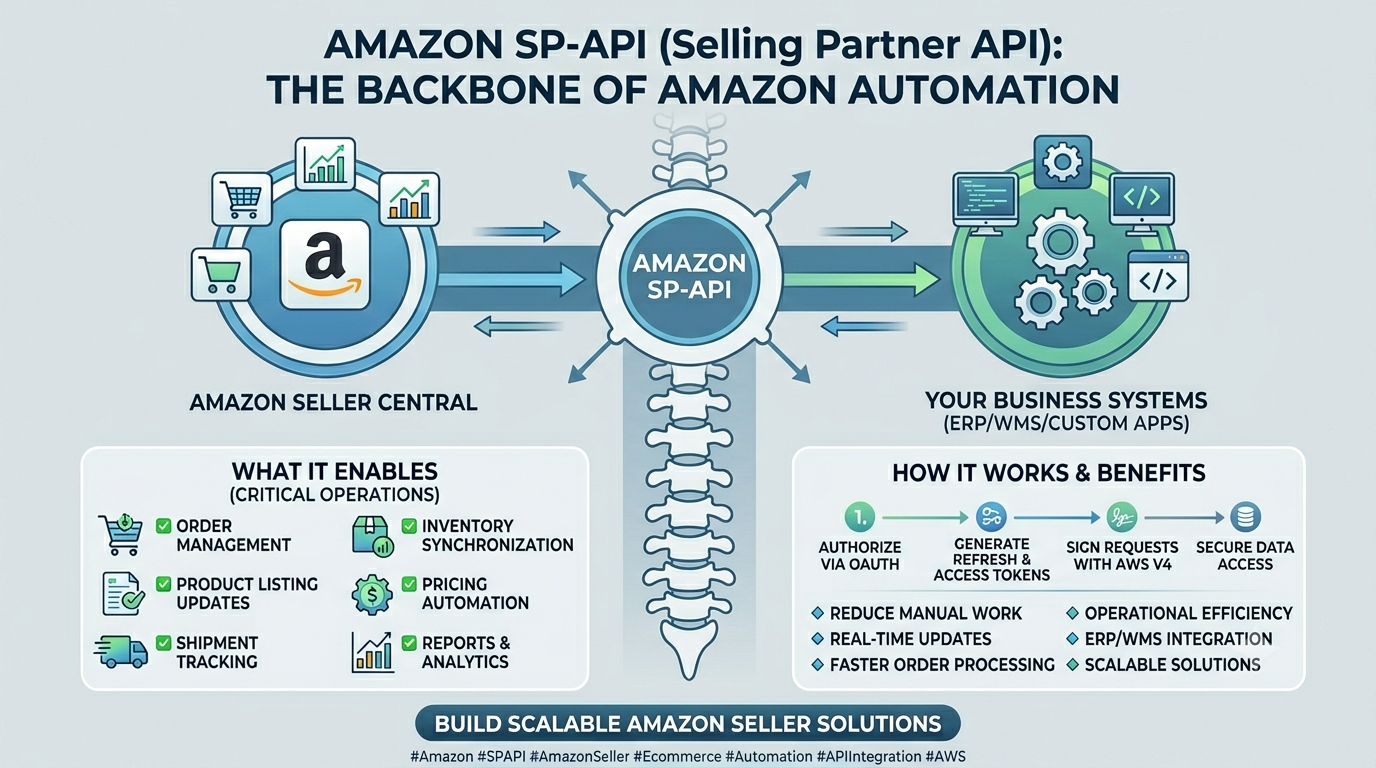
Amazon SP-API (Selling Partner API) is Amazon's modern API platform that allows developers and businesses to interact directly with Amazon Seller Central and Vendor Central data.
It replaces the older Amazon MWS (Marketplace Web Service) and provides secure access to manage:
Orders Inventory Products/Catalog Pricing Reports Shipments Finances Notifications Advertising data Why is SP-API Used?
Businesses use SP-API to automate Amazon operations instead of manually working in Seller Central.
Common Use Cases
- Order Management Fetch new orders automatically Update order status Process cancellations Generate invoices
- Inventory Management Sync stock levels between ERP/WMS and Amazon Prevent overselling Update inventory automatically
- Product Listing Management Create new listings Update titles, descriptions, and images Manage product catalog data
- Pricing Automation Update prices based on competitor pricing Implement repricing strategies
- Reporting & Analytics Download settlement reports Sales reports Inventory reports Performance reports
- Shipment & Fulfillment Create FBA shipments Track shipment status Manage fulfillment workflows SP-API Authentication Process
Amazon uses OAuth 2.0 and AWS Signature Version 4 (SigV4) for security.
Step-by-Step Flow Seller Authorizes Application ↓ Get Refresh Token ↓ Generate Access Token ↓ Sign Request using AWS SigV4 ↓ Call Amazon SP-API Endpoint ↓ Receive Response Authentication Components Component Purpose Login With Amazon (LWA) OAuth Authentication Refresh Token Long-term authorization Access Token Temporary API access AWS IAM Role API permissions AWS Signature V4 Request signing Real-World Example
Suppose you have an ERP system.
Customer Places Order on Amazon ↓ SP-API Retrieves Order ↓ ERP Creates Sales Order ↓ Warehouse Ships Product ↓ Tracking Updated via SP-API ↓ Customer Receives Tracking Details
This eliminates manual work and ensures real-time synchronization.